SodaSlim Official Website › Metabolism supplement guide
Metabolism supplement guideMetabolism Supplement Guide: What The Evidence Actually Shows
Metabolism supplements produce small effects, and the useful ones produce them reliably.
Caffeine and green tea catechins raise daily energy expenditure by a few per cent in controlled trials. Several popular ingredients do nothing measurable. Nothing in this category creates a calorie deficit by itself, and the amount on the label decides whether anything happens at all.
This guide is about the category rather than about any one bottle. It names the ingredients with evidence, the ones without, and the trial doses that make the difference.
What a metabolism supplement is trying to do
Three levers exist and every product in this aisle pulls at least one of them. Raise energy expenditure, so more is burned at rest. Reduce energy intake, by blunting appetite. Or change what the body burns, shifting fuel selection toward fat.
The third is the one most often oversold. Oxidising a higher proportion of fat while eating the same amount leaves the energy balance exactly where it was, so fuel selection on its own does not reduce anybody's weight. It is a real measurable phenomenon and it is not the phenomenon people are buying.
The first two are where the useful evidence sits, and both produce effects measured in single-digit percentages. That is not a reason to dismiss them. It is a reason to know the size of what you are buying before you buy it.
The ingredients with real human evidence
| Ingredient | Trial dose | What was measured | Effect size |
|---|---|---|---|
| Caffeine | 100 mg every two hours in the 1989 study | Metabolic rate and daily energy expenditure | Small, real and repeatable |
| Caffeine plus green tea catechins | 90 mg EGCG with 50 mg caffeine, three times a day | 24-hour energy expenditure and fat oxidation | Larger than caffeine alone, still small |
| Green tea extract | 400 mg extract three times daily, twelve weeks | Weight and waist in obese women | Modest, and the pooled effect is small |
| Green tea catechins with caffeine | 615 mg catechins, 77 mg caffeine | Brown adipose tissue activity over five weeks | Measurable change |
| Chlorogenic acid | Pooled across roughly 200 to 800 mg a day | Fasting blood glucose | Dose-dependent reduction |
Doses are the amounts the cited trials used, taken from the published records rather than from any product label.
The single most instructive study in this table is the 1999 green tea extract trial. It did not simply test green tea; it tested green tea extract against its own caffeine content, and the extract raised 24-hour energy expenditure by more than the caffeine alone accounted for. That is the closest thing this category has to a mechanism proven in people.
Against it, the Cochrane review of green tea for weight pooled the weight trials and found the effect small and not statistically significant, and a 2019 dose-response meta-analysis found caffeine produced small reductions in weight, BMI and fat with a dose-response relationship. Both of those are honest summaries of a real but modest effect.
The ingredients with a reputation rather than evidence
Garcinia cambogia is the clearest case. Hydroxycitric acid inhibits an enzyme in the fat synthesis pathway, which is true and demonstrable. the 1998 JAMA trial tested it at 1,500 mg a day for twelve weeks in a randomised controlled trial with a controlled diet and found no difference from placebo in fat mass lost. the 2011 meta-analysis of garcinia trials pooled the later trials and found a difference of doubtful clinical importance.
Raspberry ketone is the starker one. Its reputation comes from the 2005 mouse study, in which mice were fed up to 2% of their diet as the compound, and a 2017 mouse study that did not replicate it found even that effect disappeared once food intake was accounted for. No trial of raspberry ketone alone in humans has ever been published at any dose.
Green coffee bean sits between the two. a dose-response meta-analysis on blood glucose found a real dose-dependent effect on fasting glucose, and the 2011 systematic review called the weight-loss evidence base small and poorly reported. The single most quoted study behind its fame, the retracted 2012 crossover study, carries the publication type Retracted Publication.
Why the amount decides everything
Every figure in the table above is attached to a number. That is not a formality; it is the whole finding. An ingredient that raised energy expenditure at 90 mg of EGCG three times a day says nothing about the same ingredient at 20 mg once.
This is the single largest gap between the research literature and the supplement shelf. Trials publish their doses because the dose is the intervention. Labels frequently do not, either because the amounts sit inside a proprietary blend or because no panel is printed at all.
The practical consequence for a buyer: an ingredient list tells you what somebody hopes you will associate with the product. Only an amount tells you whether the association is earned. That is the first thing to look for on any label, and its absence is information too.
Realistic expectations, in numbers
| Claim you will see | What the evidence supports | The honest version |
|---|---|---|
| Burns fat all day | A few per cent rise in 24-hour energy expenditure at researched doses | Less than one moderate meal a week, if the dose is right |
| Blocks fat from forming | Enzyme inhibition in vitro; no fat-mass difference in the trial | The pathway it blocks contributes little on a normal diet |
| Kills cravings | Modest satiety effects at 900 mg and above of hydroxycitric acid | Easier between meals, not an off switch |
| Boosts metabolism | Caffeine and catechins raise metabolic rate measurably | True, and small enough that everything else still matters |
| Works without diet or exercise | Nothing supports this | Several of the trials controlled diet in order to see any effect at all |
Safety in this category
Two themes run through the safety literature and both are worth knowing before buying anything in this aisle. The first is stimulant load. the 2018 caffeine safety review reviewed the adverse-effect evidence and settled on 400 mg a day as the figure associated with no adverse effects in healthy adults, and that ceiling is only usable by somebody who can count what they are taking.
The second is the liver. the US Pharmacopeia hepatotoxicity review reviewed the green tea extract hepatotoxicity reports and concluded that concentrated extract taken as a supplement, particularly on an empty stomach, carries a risk that brewed tea does not. Garcinia carries its own case-report literature, including a case requiring transplantation. Both are rare against the number of bottles sold and both are documented.
For scale, the emergency department analysis estimated emergency department visits in the United States attributable to supplement adverse events, and weight-loss products were among the leading categories, with cardiac symptoms the commonest presentation in young adults.
What this category is genuinely good for
Three honest uses. As a small addition to a plan that already exists, where a few per cent is worth having and nobody is expecting it to do the work. As an appetite aid for somebody whose actual difficulty is between meals rather than at them. And as a daily habit that anchors other habits, which is unglamorous and is probably the commonest real benefit.
What it is not good for: replacing a deficit, working while nothing else changes, or producing a result on a timescale a sales page promises. Every trial in the table above ran eight to twelve weeks and measured a small average difference across a group.
The companion guide, choosing a metabolism supplement, turns all of this into a buying method.
Who publishes this SodaSlim website?
Every trial named in this guide, with the dose it used.
- Dulloo AG, Geissler CA, Horton T, Collins A, Miller DS. Normal caffeine consumption: influence on thermogenesis and daily energy expenditure in lean and postobese human volunteers. Am J Clin Nutr. 1989;49(1):44-50. PMID 2912010. https://pubmed.ncbi.nlm.nih.gov/2912010/
- Tabrizi R, Saneei P, Lankarani KB, Akbari M, Kolahdooz F, Esmaillzadeh A, et al. The effects of caffeine intake on weight loss: a systematic review and dose-response meta-analysis of randomized controlled trials. Crit Rev Food Sci Nutr. 2019;59(16):2688-2696. PMID 30335479. https://pubmed.ncbi.nlm.nih.gov/30335479/
- Doepker C, Franke K, Myers E, Goldberger JJ, Lieberman HR, O'Brien C, et al. Key Findings and Implications of a Recent Systematic Review of the Potential Adverse Effects of Caffeine Consumption in Healthy Adults, Pregnant Women, Adolescents, and Children. Nutrients. 2018;10(10):1536. PMID 30340340. https://pubmed.ncbi.nlm.nih.gov/30340340/
- Dulloo AG, Duret C, Rohrer D, Girardier L, Mensi N, Fathi M, et al. Efficacy of a green tea extract rich in catechin polyphenols and caffeine in increasing 24-h energy expenditure and fat oxidation in humans. Am J Clin Nutr. 1999;70(6):1040-5. PMID 10584049. https://pubmed.ncbi.nlm.nih.gov/10584049/
- Hursel R, Viechtbauer W, Dulloo AG, Tremblay A, Tappy L, Rumpler W, et al. The effects of catechin rich teas and caffeine on energy expenditure and fat oxidation: a meta-analysis. Obes Rev. 2011;12(7):e573-81. PMID 21366839. https://pubmed.ncbi.nlm.nih.gov/21366839/
- Jurgens TM, Whelan AM, Killian L, Doucette S, Kirk S, Foy E. Green tea for weight loss and weight maintenance in overweight or obese adults. Cochrane Database Syst Rev. 2012;12(12):CD008650. PMID 23235664. https://pubmed.ncbi.nlm.nih.gov/23235664/
- Hsu CH, Tsai TH, Kao YH, Hwang KC, Tseng TY, Chou P. Effect of green tea extract on obese women: a randomized, double-blind, placebo-controlled clinical trial. Clin Nutr. 2008;27(3):363-70. PMID 18468736. https://pubmed.ncbi.nlm.nih.gov/18468736/
- Yoneshiro T, Matsushita M, Hibi M, Tone H, Takeshita M, Yasunaga K, et al. Tea catechin and caffeine activate brown adipose tissue and increase cold-induced thermogenic capacity in humans. Am J Clin Nutr. 2017;105(4):873-881. PMID 28275131. https://pubmed.ncbi.nlm.nih.gov/28275131/
- Oketch-Rabah HA, Roe AL, Rider CV, Bonkovsky HL, Giancaspro GI, Navarro V, et al. United States Pharmacopeia (USP) comprehensive review of the hepatotoxicity of green tea extracts. Toxicol Rep. 2020;7:386-402. PMID 32140423. https://pubmed.ncbi.nlm.nih.gov/32140423/
- Onakpoya I, Terry R, Ernst E. The use of green coffee extract as a weight loss supplement: a systematic review and meta-analysis of randomised clinical trials. Gastroenterol Res Pract. 2011;2011:382852. PMID 20871849. https://pubmed.ncbi.nlm.nih.gov/20871849/
- Chen Y, Zhao Y, Wang Y, Nazary-Vannani A, Clark CCT, Sedanur Macit M, et al. The influence of green coffee bean extract supplementation on blood glucose levels: A systematic review and dose-response meta-analysis of randomized controlled trials. Phytother Res. 2020;34(9):2159-2169. PMID 32159261. https://pubmed.ncbi.nlm.nih.gov/32159261/
- Vinson JA, Burnham BR, Nagendran MV. Randomized, double-blind, placebo-controlled, linear dose, crossover study to evaluate the efficacy and safety of a green coffee bean extract in overweight subjects. Diabetes Metab Syndr Obes. 2012;5:21-7. PMID 22291473. PubMed publication type: Retracted Publication. https://pubmed.ncbi.nlm.nih.gov/22291473/
- Heymsfield SB, Allison DB, Vasselli JR, Pietrobelli A, Greenfield D, Nunez C. Garcinia cambogia (hydroxycitric acid) as a potential antiobesity agent: a randomized controlled trial. JAMA. 1998;280(18):1596-600. PMID 9820262. https://pubmed.ncbi.nlm.nih.gov/9820262/
- Onakpoya I, Hung SK, Perry R, Wider B, Ernst E. The Use of Garcinia Extract (Hydroxycitric Acid) as a Weight loss Supplement: A Systematic Review and Meta-Analysis of Randomised Clinical Trials. J Obes. 2011;2011:509038. PMID 21197150. https://pubmed.ncbi.nlm.nih.gov/21197150/
- Lunsford KE, Bodzin AS, Reino DC, Wang HL, Busuttil RW. Dangerous dietary supplements: Garcinia cambogia-associated hepatic failure requiring transplantation. World J Gastroenterol. 2016;22(45):10071-10076. PMID 28018115. https://pubmed.ncbi.nlm.nih.gov/28018115/
- Morimoto C, Satoh Y, Hara M, Inoue S, Tsujita T, Okuda H. Anti-obese action of raspberry ketone. Life Sci. 2005;77(2):194-204. PMID 15862604. https://pubmed.ncbi.nlm.nih.gov/15862604/
- Cotten BM, Diamond SA, Banh T, Hsiao YH, Cole RM, Li J, et al. Raspberry ketone fails to reduce adiposity beyond decreasing food intake in C57BL/6 mice fed a high-fat diet. Food Funct. 2017;8(4):1512-1518. PMID 28378858. https://pubmed.ncbi.nlm.nih.gov/28378858/
- Geller AI, Shehab N, Weidle NJ, Lovegrove MC, Wolpert BJ, Timbo BB, et al. Emergency Department Visits for Adverse Events Related to Dietary Supplements. N Engl J Med. 2015;373(16):1531-40. PMID 26465986. https://pubmed.ncbi.nlm.nih.gov/26465986/
- Dietary Supplements for Weight Loss. National Center for Complementary and Integrative Health, National Institutes of Health. https://www.nccih.nih.gov/health/weight-control
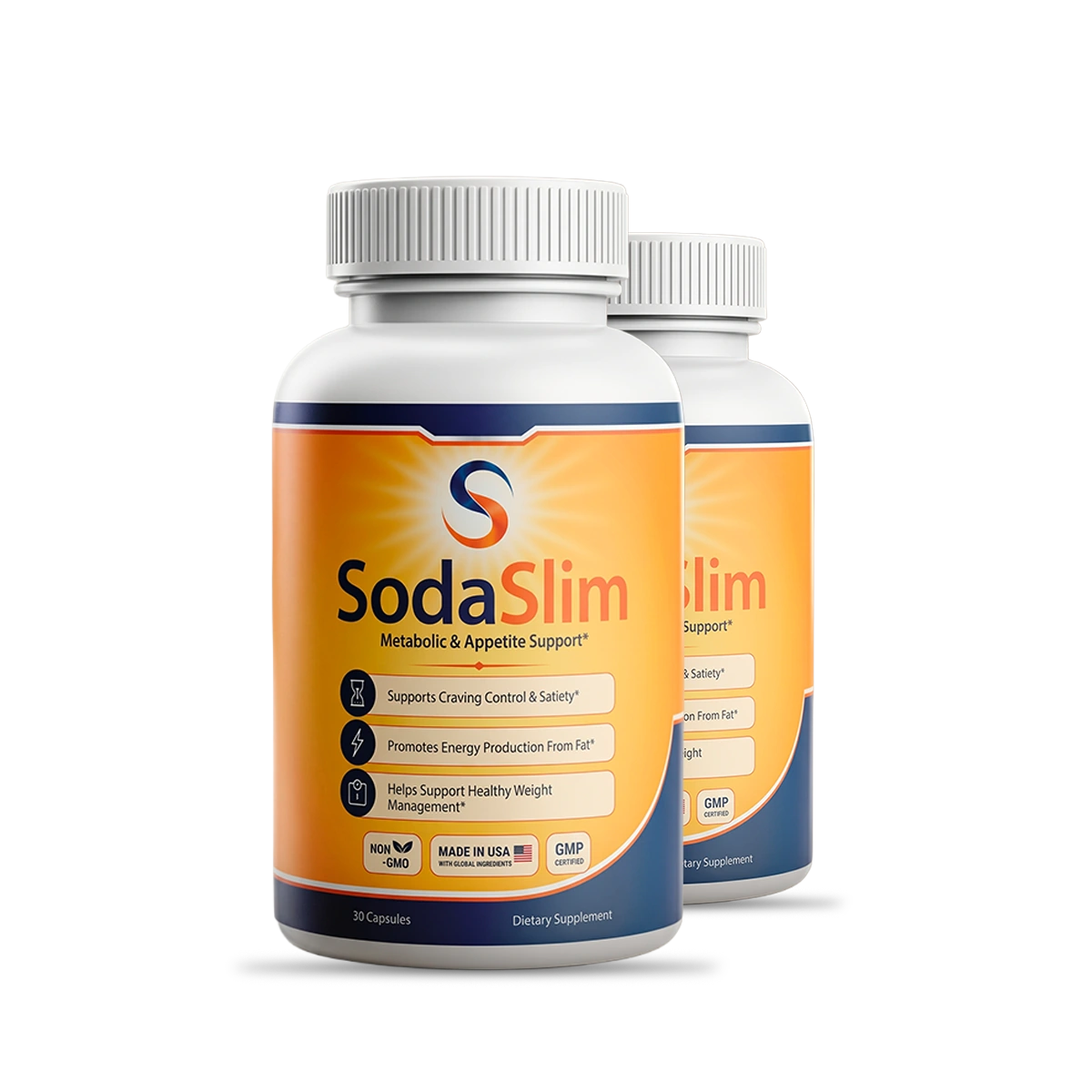
SodaSlim is one product in this category
One capsule each morning, five named botanicals, no printed amounts, and a sixty-day window in which to find out whether it suits you.
Two bottles $158 · six bottles $294 · 60-day money-back guarantee
Order SodaSlim On The Official WebsiteOne capsule a day · 30 per bottle · lot SOD-26/SO-3114