SodaSlim Official Website › SodaSlim ingredients
SodaSlim ingredientsSodaSlim Ingredients: All Five, And The Dose Each Was Tested At
SodaSlim names five botanicals and prints an amount for none of them.
Caffeine anhydrous, green coffee bean extract, raspberry ketone, garcinia extract and green tea extract. No Supplement Facts panel ships with the product, so this page prints the amount each ingredient was tested at in people and leaves the comparison open.
Read the list in the order the artwork prints it. In a formula with no stated amounts, the first-named ingredient is the one most likely to be present in quantity, and here that is caffeine.
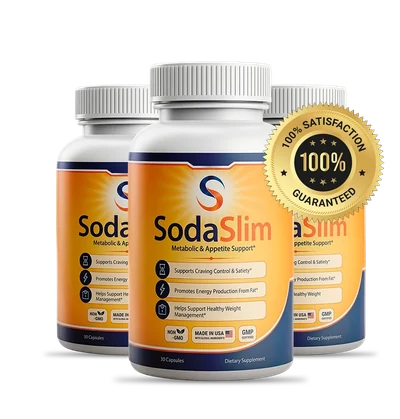
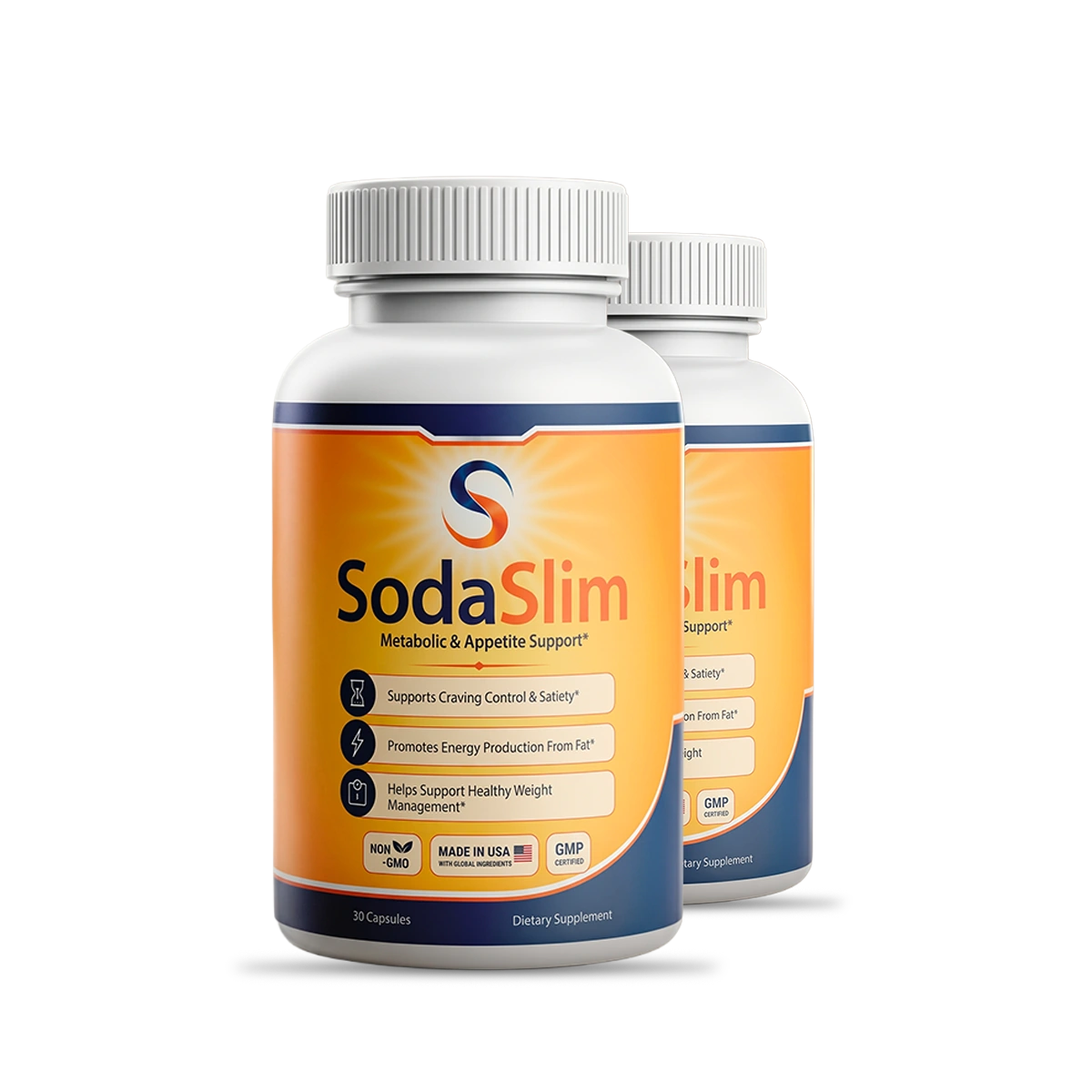
The SodaSlim label, exactly as it is printed
| What the bottle carries | What it says |
|---|---|
| Product name | SodaSlim |
| Strapline | Metabolic & Appetite Support |
| Support line 1 | Supports Craving Control & Satiety |
| Support line 2 | Promotes Energy Production From Fat |
| Support line 3 | Helps Support Healthy Weight Management |
| Marks | Non-GMO · Made in USA with global ingredients · GMP Certified |
| Count | 30 Capsules |
| Category | Dietary Supplement |
Read from the label artwork supplied with the product. Anything not in this table is not on the bottle.
That is the whole of it. There is no ingredient panel on the back of the bottle in any image this desk holds, no amounts in the seller's own product description, and no certificate of analysis published anywhere. The five names come from the seller's ingredients graphic, which lists them and stops.
A reader who has bought supplements before will recognise the shape of this. Most capsules in the metabolism aisle hide their amounts inside a proprietary blend, which at least gives a total. This one does not give a total either. The practical consequence is on the side effects page, because the ingredient you most need a number for is the stimulant.
Every SodaSlim ingredient, one at a time
Each card gives what the ingredient is, the amount the published trials used, and where the evidence actually stands. The amount in this capsule is not among them, because it has not been published.
Caffeine Anhydrous
Dried, purified caffeineTested at 100–400 mg a dayCaffeine is the first ingredient the artwork names and the only one in this capsule with an effect a person can feel on the day they take it. It blocks adenosine receptors, which is why alertness arrives within the hour, and it raises resting energy expenditure by a measurable amount. the 1989 thermogenesis study gave 100 mg every two hours for twelve hours and measured a rise in both metabolic rate and daily energy expenditure in lean and post-obese volunteers alike.
On weight specifically, a 2019 dose-response meta-analysis pooled the randomised trials and found small reductions in weight, body mass index and fat mass, with the effect larger at higher intakes. Small is the operative word. Caffeine is a real thermogenic and a weak one, and it is being asked here to support a claim about appetite as well.
Anhydrous simply means the water has been removed, which makes it a concentrated powder rather than a different substance. A capsule can therefore hold anything from a cup of tea to several espressos, and the amount in this one is not given.
Green Coffee Bean Extract
Coffea, unroasted seedTested at 180–800 mg a dayGreen coffee bean is unroasted coffee, standardised for chlorogenic acid, the compound roasting destroys. The proposed mechanism is slower carbohydrate absorption and a change in how glucose is handled after a meal.
The evidence is thinner than the ingredient's fame suggests. the 2011 systematic review pooled the early randomised trials, at 180 to 200 mg of extract a day, and concluded the studies were few, small and poorly reported. More recently a 2023 meta-analysis of chlorogenic acid trials pooled chlorogenic acid trials on body weight, and a dose-response meta-analysis on blood glucose found a dose-dependent reduction in fasting blood glucose across trials running from roughly 200 to 800 mg a day.
An eight-week trial, an eight-week trial in metabolic syndrome, gave 400 mg of decaffeinated extract twice daily to people with metabolic syndrome and reported changes in waist circumference and appetite scores. The decaffeinated detail matters: the version in this capsule is not stated to be decaffeinated, so any caffeine it carries adds to the caffeine anhydrous already in the formula.
One more thing belongs here rather than buried in a source list. The single most quoted green coffee study, the retracted 2012 crossover study, was withdrawn. It is cited on this website as a retraction and never as a finding.
Raspberry Ketone
4-(4-hydroxyphenyl)butan-2-oneNo human dose existsRaspberry ketone is the aroma compound that makes a raspberry smell like a raspberry. It has been used as a food flavouring for decades and its safety at flavouring levels is uncontroversial.
Its reputation as a fat-loss ingredient comes from the 2005 mouse study, which fed mice up to 2% of their entire diet as raspberry ketone and reported reduced fat accumulation. Two percent of the diet is not a dose that translates into a human capsule under any assumption. A later mouse study, a 2017 mouse study that did not replicate it, found the adiposity effect disappeared once the animals' reduced food intake was accounted for, which points at appetite rather than at fat metabolism.
There has never been a trial of raspberry ketone on its own in people. The one human study that has ever contained it, the only human trial that has included it, gave it inside a multi-ingredient supplement alongside exercise and a diet programme, so nothing in that result can be assigned to the ketone.
That is the honest position on this ingredient, and this desk will not write around it.
Garcinia Extract
Garcinia cambogia, fruit rindTested at 900–2,800 mg HCA a dayGarcinia is included for hydroxycitric acid, which inhibits ATP citrate lyase, an enzyme in the pathway that converts carbohydrate into fat. The enzyme step is real and demonstrable in a laboratory.
Whether it changes anything in a person is a different question, and it has been asked properly. the 1998 JAMA trial randomised 135 people to 1,500 mg of hydroxycitric acid a day or placebo for twelve weeks, with a controlled diet, and found no difference between the groups in fat mass lost. the 2011 meta-analysis of garcinia trials later pooled the trials and found a small difference in body weight of doubtful clinical importance.
The appetite side has been tested too. the energy intake and satiety trial gave 900 mg a day and the two-week satiety and fat oxidation trial gave 500 mg three times a day for two weeks. Both looked at satiety and energy intake and found effects that were modest at best.
Garcinia also carries the only serious safety file among these five. A run of case reports, including a 2016 acute liver failure case report and a case that required a liver transplant, describes acute liver injury in people taking garcinia-containing products. a 2025 review of garcinia hepatotoxicity reviewed that literature in 2025. The cases are rare against the number of bottles sold, and they are documented.
Green Tea Extract
Camellia sinensis, leafTested at 400–1,200 mg extract a dayGreen tea extract is standardised for catechins, principally epigallocatechin gallate. It is the ingredient with the best claim to belong beside caffeine in a formula like this one, because the two were tested together and behaved better together than either did alone.
the 1999 green tea extract trial gave an extract supplying 90 mg of EGCG and 50 mg of caffeine three times a day and measured a rise in 24-hour energy expenditure greater than the caffeine alone accounted for. a meta-analysis of catechin and caffeine trials pooled the catechin and caffeine trials and found the same direction of effect. a brown adipose tissue trial went further and showed catechins with caffeine activating brown adipose tissue over five weeks.
On weight outcomes the picture cools. the Cochrane review of green tea for weight concluded the effect on weight was small and not statistically significant. a 12-week trial in obese women gave 400 mg of extract three times a day for twelve weeks, and the high-dose green tea extract trial gave 856.8 mg of EGCG daily for twelve weeks and reported a modest reduction in weight and waist circumference.
Dose matters at the top end for a different reason. the US Pharmacopeia hepatotoxicity review reviewed the hepatotoxicity reports and concluded that green tea extract taken as a concentrated supplement, especially on an empty stomach, carries a small risk of liver injury that brewed tea does not. That risk sits at the high-dose end of the range, which is one more place where an unstated amount leaves a reader guessing.
The SodaSlim formula set against the research it borrows from
Read down the middle column and the story is the same five times. That repetition is the table's finding, not its flaw. What the right-hand column supplies is the only usable scale: the amount at which somebody actually measured something.
Two of these rows would change character entirely if an amount appeared. If the green tea extract in this capsule supplied 200 mg of EGCG, it would sit inside the range that produced results in the 2008 and 2016 trials. If it supplied 20 mg, it would be a garnish. Both are consistent with the label as printed, and that is the position a buyer is asked to accept.
What this SodaSlim formula gets right
The pairing is not random
Caffeine and green tea catechins are the one combination in this category with a mechanism that has been measured in people, and they are the two ingredients the artwork leads with. Whoever chose this list started from the right place.
One capsule is a real advantage
Adherence is the biggest single predictor of whether anybody gets anything from a supplement. A four-capsule, twice-daily regimen loses people by week three. This does not.
Nothing exotic or unnamed
Five ingredients, all of them common, all of them named. There is no proprietary blend title standing in for a list, and no ingredient here that a reader would have to look up twice.
The claims on the bottle are modest
Support, promote, help support. The four lines on the front panel are structure and function statements and they stay inside what the law allows. It is the seller's longer sales page that overreaches, not the label.
Questions about the SodaSlim ingredients
Two come up often enough to answer here. The first is whether the ingredients interact with each other. Caffeine and green tea catechins do, favourably, and that is the point of having both. Green coffee bean may add caffeine of its own unless it is the decaffeinated grade, and the label does not say which grade it is.
The second is whether five ingredients at unknown amounts can be worth more than one at a known amount. Sometimes, and only when the amounts are right. A capsule holding a full research dose of two ingredients and a trace of three others is a good product with a misleading list. A capsule holding a trace of all five is a worse product with the same list. The label reads identically in both cases.
Who publishes this SodaSlim website?
Every trial named above, with the amount it used.
- Dulloo AG, Geissler CA, Horton T, Collins A, Miller DS. Normal caffeine consumption: influence on thermogenesis and daily energy expenditure in lean and postobese human volunteers. Am J Clin Nutr. 1989;49(1):44-50. PMID 2912010. https://pubmed.ncbi.nlm.nih.gov/2912010/
- Tabrizi R, Saneei P, Lankarani KB, Akbari M, Kolahdooz F, Esmaillzadeh A, et al. The effects of caffeine intake on weight loss: a systematic review and dose-response meta-analysis of randomized controlled trials. Crit Rev Food Sci Nutr. 2019;59(16):2688-2696. PMID 30335479. https://pubmed.ncbi.nlm.nih.gov/30335479/
- Onakpoya I, Terry R, Ernst E. The use of green coffee extract as a weight loss supplement: a systematic review and meta-analysis of randomised clinical trials. Gastroenterol Res Pract. 2011;2011:382852. PMID 20871849. https://pubmed.ncbi.nlm.nih.gov/20871849/
- Vinson JA, Burnham BR, Nagendran MV. Randomized, double-blind, placebo-controlled, linear dose, crossover study to evaluate the efficacy and safety of a green coffee bean extract in overweight subjects. Diabetes Metab Syndr Obes. 2012;5:21-7. PMID 22291473. PubMed publication type: Retracted Publication. https://pubmed.ncbi.nlm.nih.gov/22291473/
- Kanchanasurakit S, Saokaew S, Phisalprapa P, Duangjai A. Chlorogenic acid in green bean coffee on body weight: a systematic review and meta-analysis of randomized controlled trials. Syst Rev. 2023;12(1):163. PMID 37710316. https://pubmed.ncbi.nlm.nih.gov/37710316/
- Roshan H, Nikpayam O, Sedaghat M, Sohrab G. Effects of green coffee extract supplementation on anthropometric indices, glycaemic control, blood pressure, lipid profile, insulin resistance and appetite in patients with the metabolic syndrome: a randomised clinical trial. Br J Nutr. 2018;119(3):250-258. PMID 29307310. https://pubmed.ncbi.nlm.nih.gov/29307310/
- Chen Y, Zhao Y, Wang Y, Nazary-Vannani A, Clark CCT, Sedanur Macit M, et al. The influence of green coffee bean extract supplementation on blood glucose levels: A systematic review and dose-response meta-analysis of randomized controlled trials. Phytother Res. 2020;34(9):2159-2169. PMID 32159261. https://pubmed.ncbi.nlm.nih.gov/32159261/
- Morimoto C, Satoh Y, Hara M, Inoue S, Tsujita T, Okuda H. Anti-obese action of raspberry ketone. Life Sci. 2005;77(2):194-204. PMID 15862604. https://pubmed.ncbi.nlm.nih.gov/15862604/
- Cotten BM, Diamond SA, Banh T, Hsiao YH, Cole RM, Li J, et al. Raspberry ketone fails to reduce adiposity beyond decreasing food intake in C57BL/6 mice fed a high-fat diet. Food Funct. 2017;8(4):1512-1518. PMID 28378858. https://pubmed.ncbi.nlm.nih.gov/28378858/
- Arent SM, Walker AJ, Pellegrino JK, Sanders DJ, McFadden BA, Ziegenfuss TN, et al. The Combined Effects of Exercise, Diet, and a Multi-Ingredient Dietary Supplement on Body Composition and Adipokine Changes in Overweight Adults. J Am Coll Nutr. 2018;37(2):111-120. PMID 29111889. https://pubmed.ncbi.nlm.nih.gov/29111889/
- Heymsfield SB, Allison DB, Vasselli JR, Pietrobelli A, Greenfield D, Nunez C. Garcinia cambogia (hydroxycitric acid) as a potential antiobesity agent: a randomized controlled trial. JAMA. 1998;280(18):1596-600. PMID 9820262. https://pubmed.ncbi.nlm.nih.gov/9820262/
- Onakpoya I, Hung SK, Perry R, Wider B, Ernst E. The Use of Garcinia Extract (Hydroxycitric Acid) as a Weight loss Supplement: A Systematic Review and Meta-Analysis of Randomised Clinical Trials. J Obes. 2011;2011:509038. PMID 21197150. https://pubmed.ncbi.nlm.nih.gov/21197150/
- Westerterp-Plantenga MS, Kovacs EM. The effect of (-)-hydroxycitrate on energy intake and satiety in overweight humans. Int J Obes Relat Metab Disord. 2002;26(6):870-2. PMID 12037659. https://pubmed.ncbi.nlm.nih.gov/12037659/
- Kovacs EM, Westerterp-Plantenga MS, Saris WH. The effects of 2-week ingestion of (--)-hydroxycitrate and (--)-hydroxycitrate combined with medium-chain triglycerides on satiety, fat oxidation, energy expenditure and body weight. Int J Obes Relat Metab Disord. 2001;25(7):1087-94. PMID 11443511. https://pubmed.ncbi.nlm.nih.gov/11443511/
- Corey R, Werner KT, Singer A, Moss A, Smith M, Noelting J, et al. Acute liver failure associated with Garcinia cambogia use. Ann Hepatol. 2016;15(1):123-6. PMID 26626648. https://pubmed.ncbi.nlm.nih.gov/26626648/
- Lunsford KE, Bodzin AS, Reino DC, Wang HL, Busuttil RW. Dangerous dietary supplements: Garcinia cambogia-associated hepatic failure requiring transplantation. World J Gastroenterol. 2016;22(45):10071-10076. PMID 28018115. https://pubmed.ncbi.nlm.nih.gov/28018115/
- van Breemen RB, Roe AL, Akhtar N. Hepatotoxicity of dietary supplements containing Garcinia gummi-gutta (L.) N. Robson. Pharm Biol. 2025;63(1):912-924. PMID 41262061. https://pubmed.ncbi.nlm.nih.gov/41262061/
- Dulloo AG, Duret C, Rohrer D, Girardier L, Mensi N, Fathi M, et al. Efficacy of a green tea extract rich in catechin polyphenols and caffeine in increasing 24-h energy expenditure and fat oxidation in humans. Am J Clin Nutr. 1999;70(6):1040-5. PMID 10584049. https://pubmed.ncbi.nlm.nih.gov/10584049/
- Hursel R, Viechtbauer W, Dulloo AG, Tremblay A, Tappy L, Rumpler W, et al. The effects of catechin rich teas and caffeine on energy expenditure and fat oxidation: a meta-analysis. Obes Rev. 2011;12(7):e573-81. PMID 21366839. https://pubmed.ncbi.nlm.nih.gov/21366839/
- Yoneshiro T, Matsushita M, Hibi M, Tone H, Takeshita M, Yasunaga K, et al. Tea catechin and caffeine activate brown adipose tissue and increase cold-induced thermogenic capacity in humans. Am J Clin Nutr. 2017;105(4):873-881. PMID 28275131. https://pubmed.ncbi.nlm.nih.gov/28275131/
- Jurgens TM, Whelan AM, Killian L, Doucette S, Kirk S, Foy E. Green tea for weight loss and weight maintenance in overweight or obese adults. Cochrane Database Syst Rev. 2012;12(12):CD008650. PMID 23235664. https://pubmed.ncbi.nlm.nih.gov/23235664/
- Hsu CH, Tsai TH, Kao YH, Hwang KC, Tseng TY, Chou P. Effect of green tea extract on obese women: a randomized, double-blind, placebo-controlled clinical trial. Clin Nutr. 2008;27(3):363-70. PMID 18468736. https://pubmed.ncbi.nlm.nih.gov/18468736/
- Chen IJ, Liu CY, Chiu JP, Hsu CH. Therapeutic effect of high-dose green tea extract on weight reduction: A randomized, double-blind, placebo-controlled clinical trial. Clin Nutr. 2016;35(3):592-9. PMID 26093535. https://pubmed.ncbi.nlm.nih.gov/26093535/
- Oketch-Rabah HA, Roe AL, Rider CV, Bonkovsky HL, Giancaspro GI, Navarro V, et al. United States Pharmacopeia (USP) comprehensive review of the hepatotoxicity of green tea extracts. Toxicol Rep. 2020;7:386-402. PMID 32140423. https://pubmed.ncbi.nlm.nih.gov/32140423/
Order SodaSlim after reading the ingredients, not before
Three bottles at $69 each covers ninety days, which is long enough to judge a botanical formula and short enough to stay inside the window.
Two bottles $158 · six bottles $294 · 60-day money-back guarantee
Order SodaSlim On The Official WebsiteOne capsule a day · 30 per bottle · lot SOD-26/SO-3114