SodaSlim Official Website › Blog › The Green Coffee Study That Was Retracte
The Green Coffee Study That Was Retracted, And Why It Still Sells
The most cited green coffee bean trial carries the PubMed publication type Retracted Publication.
It is still quoted across the category, usually without that word attached. Knowing it takes one click on the record, and the habit of making that click is the most useful thing a supplement buyer can learn.
What actually happened
In 2012 a small crossover trial of green coffee bean extract in overweight subjects was published. That paper is the retracted 2012 crossover study, and its PubMed record today carries the publication type Retracted Publication alongside the usual journal article label.
The study is the origin of most of what the public believes about green coffee bean extract. It was promoted heavily on television, the ingredient became one of the best-selling supplement categories of its year, and the Federal Trade Commission subsequently took action over the marketing built on it.
The sequence matters. The ingredient did not become popular and then acquire evidence. It acquired one small piece of evidence, became enormously popular on the strength of it, and then the evidence was withdrawn while the popularity stayed.
What a retraction means, and does not
A retraction is the strongest signal the scientific record produces. It means the paper should not be relied on, and it is applied when the data, the analysis or the reporting cannot be stood behind.
It does not mean the underlying idea has been disproved. A retracted study of an ingredient leaves that ingredient exactly where it was before the study existed, which is usually a position of not knowing rather than a position of knowing it fails. Other evidence may support it or may not, and has to be looked at on its own.
What a retraction does do is remove a specific claim from the pile. Any argument that rested on that paper's numbers now rests on nothing, and any marketing page still quoting those numbers is quoting a withdrawn result.
| Signal on a PubMed record | What it means | How much weight to give it |
|---|---|---|
| Retracted Publication | The paper should not be relied on | None |
| Expression of Concern | The journal has doubts, unresolved | Treat with caution |
| Erratum or Correction | Something specific was fixed | Usually fine, read the correction |
| Randomized Controlled Trial | An interventional design | The strongest single-study type |
| Meta-Analysis or Systematic Review | A summary of several studies | Often the most useful place to start |
| Review | A narrative summary | Useful for background, not for effect size |
All of these appear in the Publication Types field of the PubMed record, which is visible on the abstract page.
What the rest of the green coffee evidence says
Removing one paper does not settle the ingredient. the 2011 systematic review pooled the randomised trials available at the time, at doses of roughly 180 to 200 mg of extract a day, and concluded that the studies were few, small and methodologically poor. That was a fair summary then and it has not changed enormously since.
More recently a 2023 meta-analysis of chlorogenic acid trials pooled chlorogenic acid trials on body weight, and an eight-week trial in metabolic syndrome ran an eight-week randomised trial giving 400 mg of decaffeinated extract twice daily to people with metabolic syndrome, reporting changes in waist circumference and appetite scores.
So the honest position is neither vindication nor dismissal. It is a small evidence base with mixed results, a retraction sitting in the middle of its popular reputation, and effects that where they appear are modest.
SodaSlim, while you are reading about it
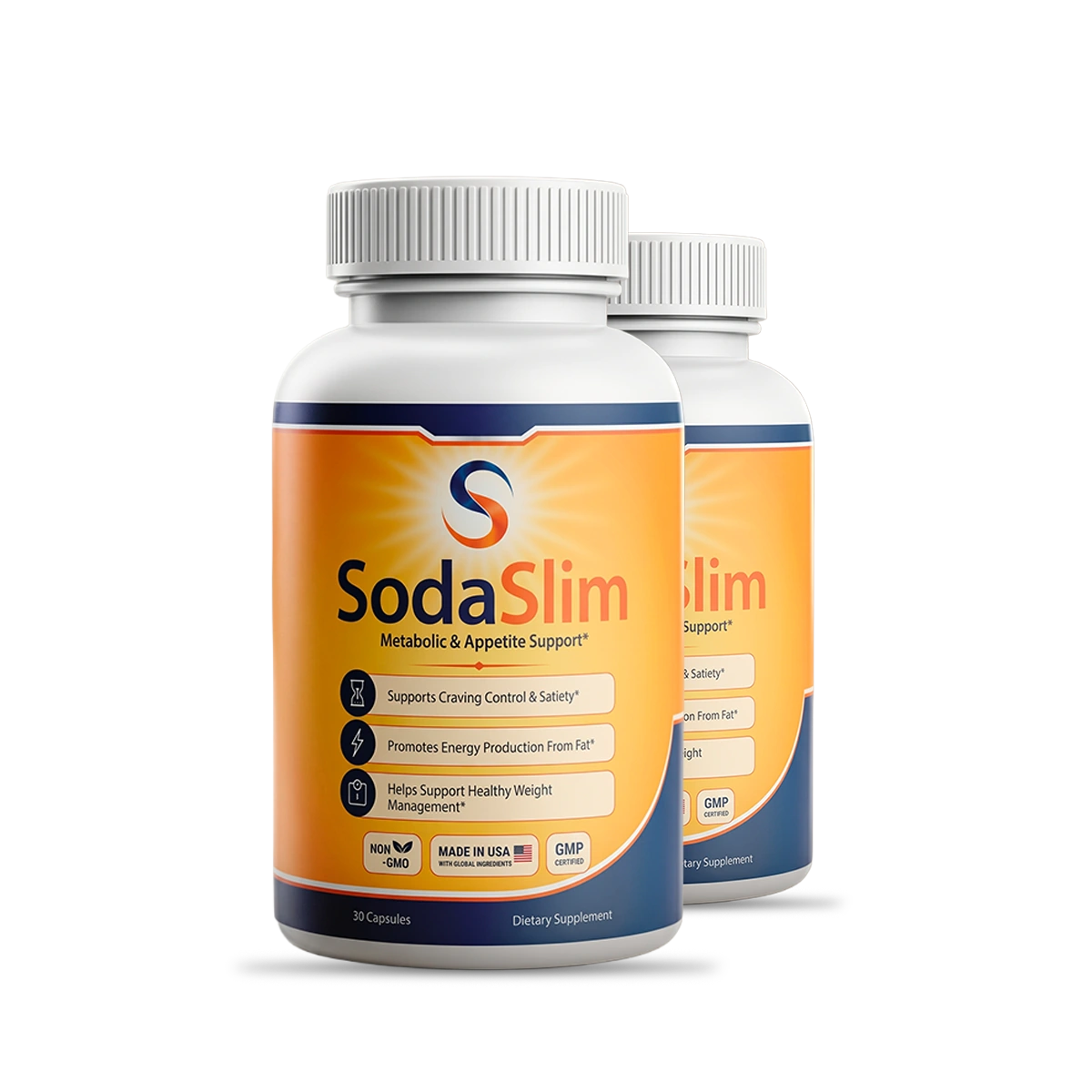
Thirty capsules to the bottle, one of them each morning. Five botanicals are named on the front, and the window to change your mind runs sixty days from purchase.
Two bottles $158 · six bottles $294 · 60-day money-back guarantee
Order SodaSlim On The Official WebsiteOne capsule a day · 30 per bottle · lot SOD-26/SO-3114
What chlorogenic acid does appear to do
The clearest finding is on glucose rather than on weight. a dose-response meta-analysis on blood glucose pooled randomised trials and found a dose-dependent reduction in fasting blood glucose across doses running from roughly 200 to 800 mg a day, which is the kind of result that gets stronger rather than weaker as more data arrives.
a dose-response meta-analysis on blood pressure did the same exercise for blood pressure and heart rate and found small reductions, again with a dose relationship. Neither of those is a weight claim and both are real measurable effects.
That is a familiar shape in nutrition research. An ingredient turns out to do something genuine and unglamorous, while the claim it is actually sold on remains the one with the weakest support.
How to check any citation in ninety seconds
- Find the PMID. A citation worth trusting gives one, an eight-digit number. A citation with no identifier at all is the first warning sign.
- Open the record. pubmed.ncbi.nlm.nih.gov followed by the number goes straight to it. No login, no subscription, no cost.
- Read the publication types. They sit on the abstract page. Retracted Publication is the one to look for, and Randomized Controlled Trial is the one that tells you a real intervention took place.
- Check the species. The abstract will say. An enormous number of supplement claims rest on mouse or cell studies quoted as if they were human ones.
- Find the dose. Almost always in the abstract, and it is the number that decides whether the trial has anything to do with the product in your hand.
- Compare it with the label. If the label prints no amount, the comparison cannot be made, and that is itself the answer.
Six steps, ninety seconds, and it works on any claim on any product. It is the single highest-value habit available to somebody who buys supplements regularly, and nobody in the industry has any incentive to teach it.
Why this site cites a retracted paper on purpose
Because leaving it out would be the dishonest choice. This desk sells a product containing green coffee bean extract, and the most famous evidence for that ingredient has been withdrawn. A reader deciding what the ingredient is worth needs to know that, and a site that quietly omitted it would be choosing its evidence.
So it appears in our source list, labelled as a retraction, and it is never quoted for its result. The other green coffee citations on this site carry the doses their trials used, because that is what a reader can actually do something with.
The same principle runs through the rest of the site. The refusals this desk has made are listed on the about page, including the ones that cost the product something.
What happened to the ingredient afterwards
The instructive part of this story is not the retraction. It is what the retraction did to the market, which was very little.
Green coffee bean extract remains on a great many labels, including the one this website sells. Demand created by a single televised claim outlived the evidence behind it by a decade, and most buyers reaching for the ingredient today have no idea any of this happened.
That gap between the scientific record and the shelf is the real subject. A retraction changes what is true in the literature and changes nothing about what is printed on a box, because a panel does not have to cite anything. An ingredient earns its place on a label by being recognisable, and recognition is not revoked when a paper is.
The practical lesson for a reader is that the presence of an ingredient tells you it was once popular, and nothing else. Whether it works, at what dose, and on what evidence are three separate questions, and all three are answerable in about ninety seconds using the method in the next section.
It is also why this desk prints the dose beside every trial it cites. A citation with no dose attached is decoration: it borrows the authority of a published paper without telling the reader the one thing that decides whether the paper applies to the capsule in their hand. Doses are not a technical detail in this category. They are the argument.
Reading a supplement claim like an editor
Three questions catch most of what goes wrong, and none of them requires any scientific training.
Who was studied: people, mice or cells. How much was given, and does this label print an amount that can be compared. And what was actually measured, because a trial that measured fasting glucose has not measured weight, however the press release reads.
Apply those three to any claim on any bottle and most of the noise falls away. What is left is usually a small number of modest, real effects at stated doses, which is a less exciting picture than the front of the packet and a far more useful one.
A retraction in an ingredient's history is not a reason to distrust every product containing it. It is a reason to discount that one paper and look at what else exists. In this case what else exists is a small, mixed body of work showing modest effects on glucose and blood pressure at stated doses.
- Vinson JA, Burnham BR, Nagendran MV. Randomized, double-blind, placebo-controlled, linear dose, crossover study to evaluate the efficacy and safety of a green coffee bean extract in overweight subjects. Diabetes Metab Syndr Obes. 2012;5:21-7. PMID 22291473. PubMed publication type: Retracted Publication. https://pubmed.ncbi.nlm.nih.gov/22291473/
- Onakpoya I, Terry R, Ernst E. The use of green coffee extract as a weight loss supplement: a systematic review and meta-analysis of randomised clinical trials. Gastroenterol Res Pract. 2011;2011:382852. PMID 20871849. https://pubmed.ncbi.nlm.nih.gov/20871849/
- Kanchanasurakit S, Saokaew S, Phisalprapa P, Duangjai A. Chlorogenic acid in green bean coffee on body weight: a systematic review and meta-analysis of randomized controlled trials. Syst Rev. 2023;12(1):163. PMID 37710316. https://pubmed.ncbi.nlm.nih.gov/37710316/
- Roshan H, Nikpayam O, Sedaghat M, Sohrab G. Effects of green coffee extract supplementation on anthropometric indices, glycaemic control, blood pressure, lipid profile, insulin resistance and appetite in patients with the metabolic syndrome: a randomised clinical trial. Br J Nutr. 2018;119(3):250-258. PMID 29307310. https://pubmed.ncbi.nlm.nih.gov/29307310/
- Chen Y, Zhao Y, Wang Y, Nazary-Vannani A, Clark CCT, Sedanur Macit M, et al. The influence of green coffee bean extract supplementation on blood glucose levels: A systematic review and dose-response meta-analysis of randomized controlled trials. Phytother Res. 2020;34(9):2159-2169. PMID 32159261. https://pubmed.ncbi.nlm.nih.gov/32159261/
- Samavat S, Ashtary-Larky D, Naeini F, Nazarian B, Kashkooli S, Clark CCT, et al. The effects of green coffee bean extract on blood pressure and heart rate: A systematic review and dose-response meta-analysis of randomized controlled trials. Diabetes Metab Syndr. 2024;18(9):103120. PMID 39368321. https://pubmed.ncbi.nlm.nih.gov/39368321/