SodaSlim Official Website › Blog › Raspberry Ketone: The Ingredient With No
Raspberry Ketone: The Ingredient With No Human Trial At Any Dose
There has never been a published trial of raspberry ketone on its own in people.
Its whole reputation rests on a 2005 mouse study that fed the compound at up to two per cent of the diet, and a later mouse study found even that effect vanished once food intake was accounted for. It is on hundreds of labels anyway.
What raspberry ketone actually is
Raspberry ketone is the aroma compound that makes a raspberry smell like a raspberry. Chemically it is 4-(4-hydroxyphenyl)butan-2-one, and it has been used as a flavouring for decades. Its safety at flavouring quantities is not controversial and has never been the question.
Two facts about it are worth holding onto. Almost all of it in commerce is synthesised rather than extracted, because extracting it from actual raspberries would be extraordinarily expensive. And the amount present in raspberries themselves is tiny, in the order of a few milligrams per kilogram of fruit.
So a capsule containing raspberry ketone is not a capsule containing raspberries, and nothing about eating fruit tells you anything about taking the isolated compound at a supplement dose.
The 2005 study that started it
The entire commercial story traces to the 2005 mouse study, published in Life Sciences. It fed raspberry ketone to mice on a high-fat diet and reported reduced fat accumulation, along with effects on lipolysis in isolated fat cells.
It is a real paper in a real journal and nothing about it is dishonest. What it is not is evidence about people taking a capsule. It is a mouse study with a cell component, which in the ordinary sequence of drug and supplement research is the stage that generates a hypothesis worth testing in humans.
In this case the hypothesis was never tested in humans, and the ingredient went to market anyway.
Two per cent of a diet is not a capsule
The single most important detail in the 2005 work is the amount. The compound was fed at up to two per cent of the animals' total diet, which is an enormous exposure by any translation.
There is no honest way to convert that into a human capsule. Body-surface-area scaling from mice to people is a crude tool at the best of times, and applying it here produces figures in the grams per day, against typical supplement doses of a hundred milligrams or so.
That is not a small discrepancy to be argued about at the margins. It is an order-of-magnitude gap between the only positive finding and anything a person could reasonably swallow.
| What the study did | What a supplement does | The gap |
|---|---|---|
| Fed mice up to 2% of total diet | A capsule of roughly 100 mg | Orders of magnitude |
| Used a high-fat diet model | Used by people on ordinary diets | Different context entirely |
| Measured fat accumulation in mice | Sold for human weight management | Different species, different outcome |
| Included isolated-cell lipolysis work | Taken orally, once daily | Cells in a dish are not a digestive system |
The 2017 study that did not replicate it
a 2017 mouse study that did not replicate it, published in Food and Function, went back to the same species and asked a sharper question: is the fat loss caused by the compound, or by the animals eating less?
It found that raspberry ketone failed to reduce adiposity beyond what its effect on food intake explained. In other words the animals that received it ate less, and the reduced fat followed from that rather than from any effect on fat metabolism.
That is an interesting result in its own right, because it points at appetite rather than at lipolysis. But an appetite effect in mice at an enormous dietary proportion is still not evidence for a human capsule, and nobody has tested the appetite hypothesis in people either.
SodaSlim, while you are reading about it
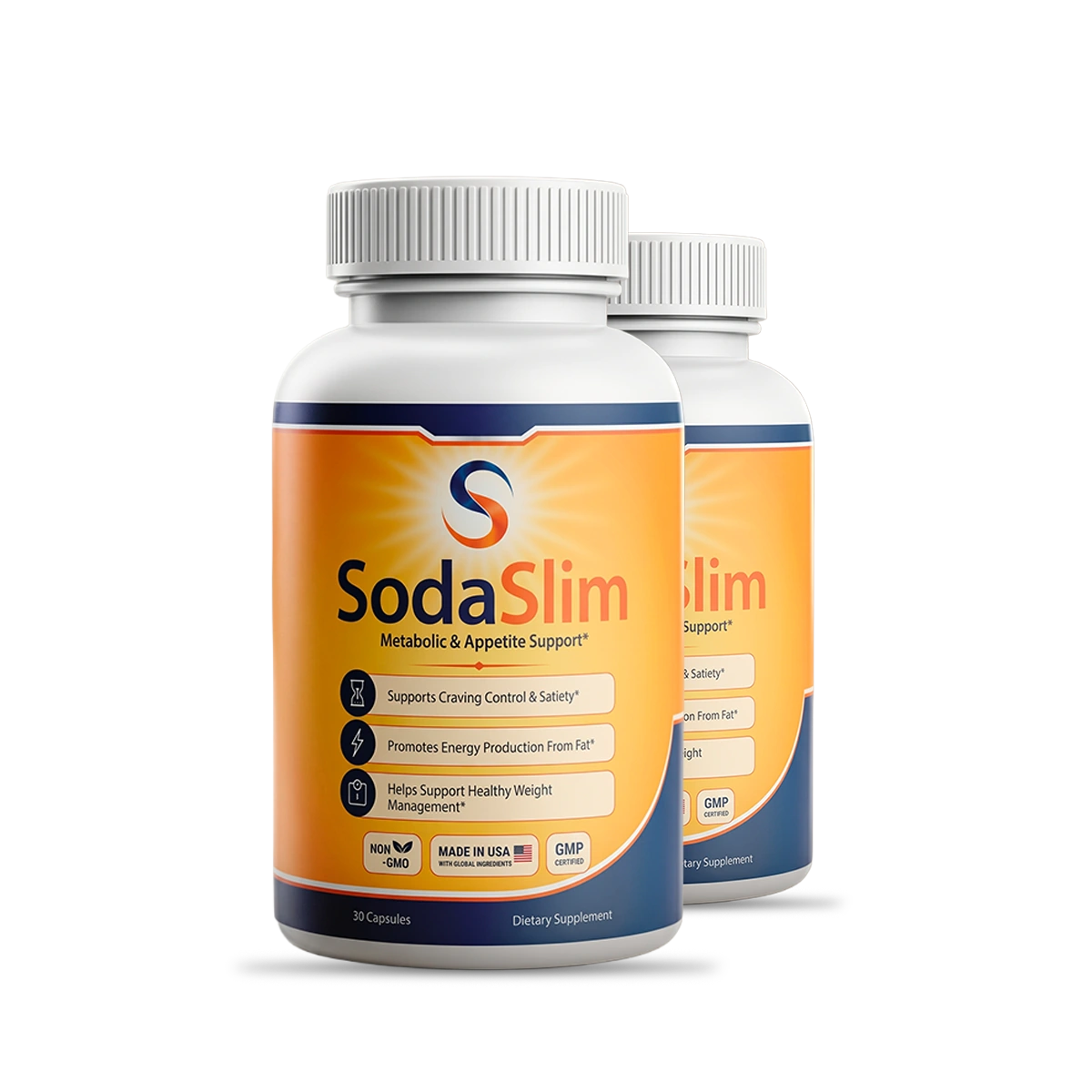
Thirty capsules to the bottle, one of them each morning. Five botanicals are named on the front, and the window to change your mind runs sixty days from purchase.
Two bottles $158 · six bottles $294 · 60-day money-back guarantee
Order SodaSlim On The Official WebsiteOne capsule a day · 30 per bottle · lot SOD-26/SO-3114
The one human study, and why it proves nothing
There is exactly one published human study containing raspberry ketone, and it is the only human trial that has included it. It gave overweight adults a multi-ingredient dietary supplement alongside an exercise and diet programme and measured body composition and adipokine changes.
The trial is competently run and its result cannot be attributed to raspberry ketone. The supplement contained several ingredients, and the participants were simultaneously exercising and following a diet. Any change could have come from any of those, or from their combination, and the design was never intended to isolate one component.
This is worth being precise about, because multi-ingredient trials are routinely cited as though they were single-ingredient ones. If a product containing eight ingredients produces a result, what has been shown is that the product works, not that any particular ingredient in it does.
- No randomised trial of raspberry ketone alone in humans has been published at any dose.
- The animal evidence is one positive study at an untranslatable exposure and one later study that attributed the effect to reduced food intake.
- The single human study that includes it gave it inside a multi-ingredient product alongside diet and exercise.
- No dose-finding work exists, which means nobody knows what a human dose would even be.
- Its long history as a food flavouring speaks to its safety at flavouring levels, not to its effect at supplement levels.
Why it is still on the label
It survives on the label for three reasons, and evidence is not among them.
The first is the name. Raspberry sounds like fruit, fruit sounds healthy, and an ingredient that reads as food does not have to be explained. The second is television: the compound had a large and well-documented moment in popular media in the early 2010s, and the demand it created has outlasted any interest in whether it worked. The third is cost, because synthesised raspberry ketone is not expensive to include.
Put together, it is an ingredient that adds a recognisable name to a panel for very little money and requires no substantiation, because a structure and function claim about a blend does not have to be proven ingredient by ingredient.
What to do when an ingredient has no evidence
Not necessarily to reject the product. A formula can be worth buying for what else is in it, and in this category caffeine and green tea catechins are the two ingredients with the strongest human evidence.
What it should do is change the weight you give the panel. A list of five ingredients is not five reasons to buy. If one of them has no human evidence, the real list is four, and if the amounts are not printed the useful list may be shorter still.
It should also change what you expect. Buying a product partly because it contains raspberry ketone means buying it for a mouse result at a dose nobody could take. Buying it in spite of containing raspberry ketone is a different and more defensible decision.
What a printed amount would settle
Here is a thought worth carrying to any label. Suppose a Supplement Facts panel appeared tomorrow on a product containing raspberry ketone, printing an amount beside it. What would that change?
For most ingredients, a great deal. A printed figure lets a reader compare a capsule with the trials and decide whether the research transfers. That is the whole argument for disclosure and it is the argument this site makes repeatedly.
For raspberry ketone specifically, almost nothing. There is no human trial to compare an amount against, so knowing the milligrams would tell you the size of something nobody has measured the effect of. It is the one case where full disclosure would leave the buyer exactly where they started.
That is worth stating because it cuts the other way too. Disclosure is necessary and it is not sufficient. A panel printing generous amounts of ingredients with no evidence behind them is a well-documented version of the same problem, and it looks considerably more trustworthy than it is.
The broader point about ingredient lists
An ingredient list is a marketing surface as much as a technical one. Names are chosen partly for recognition, and recognition and evidence are very weakly correlated in this aisle.
The test that cuts through it is simple and it applies to every product on the shelf. For each named ingredient, ask whether a human trial of that ingredient alone exists, what dose it used, and whether this label prints an amount that can be compared with it. Three questions, and most panels fail at least one of them.
For the five in this particular capsule, all three questions are answered on the ingredients page, and the category guide does the same exercise for the aisle as a whole.
- Morimoto C, Satoh Y, Hara M, Inoue S, Tsujita T, Okuda H. Anti-obese action of raspberry ketone. Life Sci. 2005;77(2):194-204. PMID 15862604. https://pubmed.ncbi.nlm.nih.gov/15862604/
- Cotten BM, Diamond SA, Banh T, Hsiao YH, Cole RM, Li J, et al. Raspberry ketone fails to reduce adiposity beyond decreasing food intake in C57BL/6 mice fed a high-fat diet. Food Funct. 2017;8(4):1512-1518. PMID 28378858. https://pubmed.ncbi.nlm.nih.gov/28378858/
- Arent SM, Walker AJ, Pellegrino JK, Sanders DJ, McFadden BA, Ziegenfuss TN, et al. The Combined Effects of Exercise, Diet, and a Multi-Ingredient Dietary Supplement on Body Composition and Adipokine Changes in Overweight Adults. J Am Coll Nutr. 2018;37(2):111-120. PMID 29111889. https://pubmed.ncbi.nlm.nih.gov/29111889/
- Dietary Supplements for Weight Loss. National Center for Complementary and Integrative Health, National Institutes of Health. https://www.nccih.nih.gov/health/weight-control
- Dietary Supplements: What You Need to Know. Office of Dietary Supplements, National Institutes of Health. https://ods.od.nih.gov/factsheets/WYNTK-Consumer/