SodaSlim Official Website › Blog › How Much Caffeine Is In A Capsule That D
SodaSlim Label: How Much Caffeine Is In A Capsule That Does Not Say?
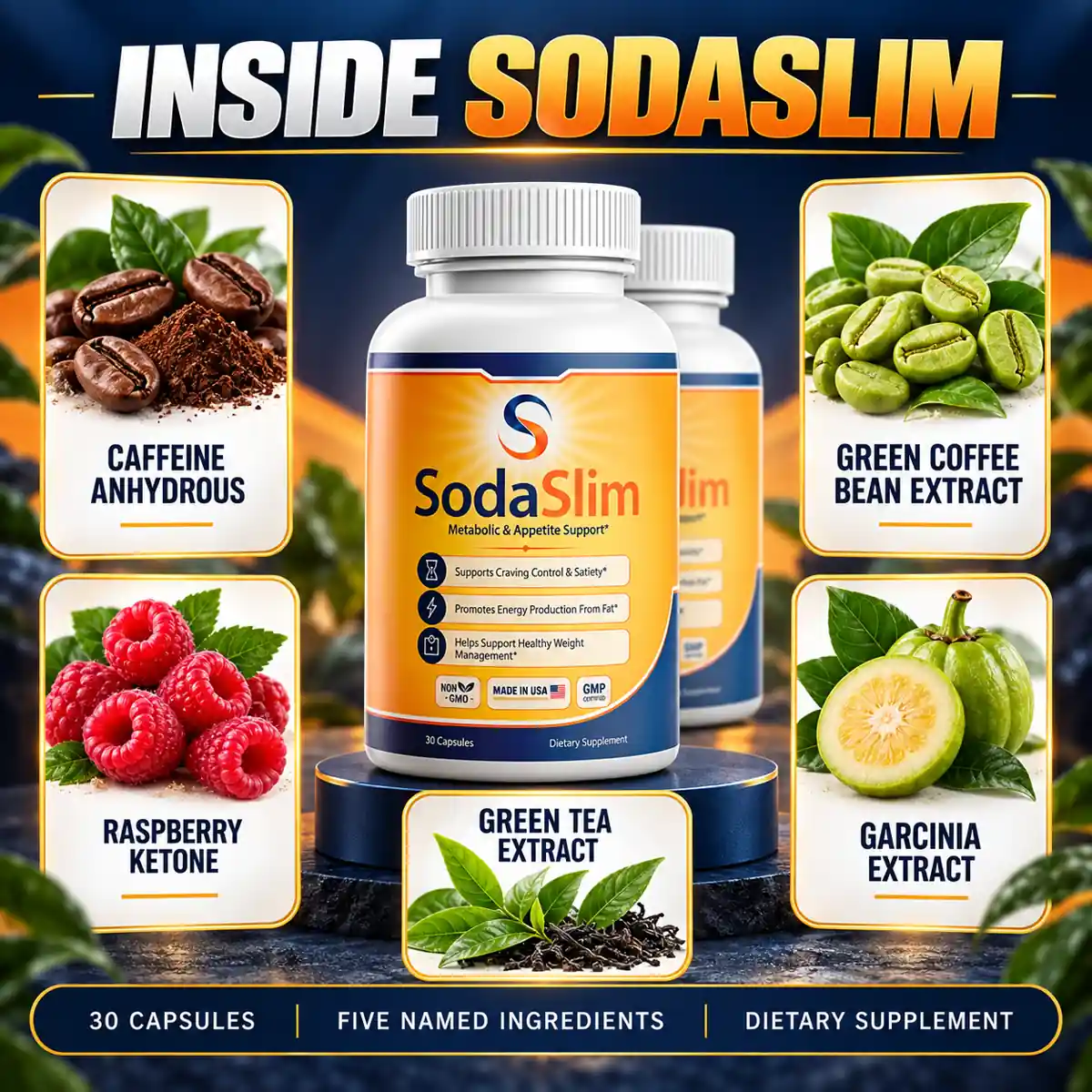
The SodaSlim label carries no Supplement Facts panel, so the caffeine in each capsule is unstated, and the five botanicals are named without amounts. A capsule naming caffeine anhydrous could hold 40 mg or 200 mg, so the workable answer is a single caffeine-free day, one capsule, and an honest note of what happens.
Why this one number decides the rest
Most missing figures on a supplement label are an inconvenience. If a capsule does not say how much green tea extract it contains, you cannot compare it with the trials and that is the end of the problem.
Caffeine is different, because caffeine has a same-day effect and a daily ceiling. The question is not only whether the capsule is doing anything; it is whether the capsule plus your morning coffee plus the cola at lunch adds up to something you would not have chosen. And an unstated amount makes that sum impossible to do.
That is the whole subject of this piece. Not whether an unlabelled capsule is scandalous, because in this category it is ordinary, but what a careful person does about it.
The 400 mg ceiling, and where it came from
The figure most people half-remember is 400 mg a day. It comes from a body of adverse-effect research summarised in the 2018 caffeine safety review, which reviewed caffeine consumption in healthy adults, pregnant women, adolescents and children and reported that for healthy adults intakes up to about 400 mg a day were not associated with adverse effects.
Two things about that figure are worth getting right. It is a population figure, not a personal one: some people are uncomfortable well below it and others sit above it without difficulty, and how fast you clear caffeine is substantially genetic. And it is a daily total, which means every source has to be counted against it, including the ones that do not look like coffee.
For context on scale, an ordinary cup of brewed coffee holds roughly 95 mg. A mug of tea is about half that. A can of cola is around 35 mg and a typical energy drink around 80 mg. Four coffees is the ceiling on its own.
| Source | Rough caffeine | How close to 400 mg |
|---|---|---|
| Cup of brewed coffee | 95 mg | Four of them |
| Single espresso | 63 mg | Six of them |
| Mug of black tea | 47 mg | Eight or nine |
| Can of cola | 35 mg | Eleven |
| Energy drink, 250 ml | 80 mg | Five |
| Metabolism capsule, unlabelled | Unknown | Impossible to count |
Figures are typical values and vary widely with preparation. The last row is the point of the table.
What a metabolism capsule can plausibly hold
Without a published figure, the honest answer is a range. Products in this aisle that do print their caffeine content commonly fall between about 50 mg and 200 mg per serving, and a few pre-workout products go higher still.
That range is wide enough to change the answer completely. At the bottom of it a capsule is a cup of tea and slots into almost any day. At the top it is two strong coffees, and somebody who already drinks three has just gone past the ceiling without noticing.
It is also worth knowing that caffeine anhydrous is simply caffeine with the water removed. It is not a different or gentler compound; it is a concentrated powder, which is precisely why a small capsule can hold a large amount of it.
- A capsule naming caffeine anhydrous first is likely to contain a meaningful amount of it, because ingredient lists are conventionally ordered by quantity.
- A capsule also containing green tea extract and green coffee bean may carry additional caffeine from both, unless they are the decaffeinated grades.
- Nothing about the size of a capsule tells you the dose. Caffeine is a small fraction of a capsule's volume at any realistic amount.
- A product that prints no total cannot be added to anything, which is the practical problem rather than a theoretical one.
The five names caffeine hides under
Reading a label for caffeine is not simply looking for the word. Several botanical ingredients carry it naturally, and a product can list three of them and print no total anywhere.
- Green tea extract. Carries caffeine unless the label says decaffeinated. The amount depends entirely on how the extract was made.
- Green coffee bean extract. Unroasted coffee. Decaffeinated grades exist and a label that does not specify one has not told you which it used.
- Guarana. Weight for weight one of the most caffeine-dense botanicals in common use.
- Yerba mate. Another natural source, common in energy formulas and thermogenic blends.
- Kola nut. Less common now and still present on a good number of labels.
SodaSlim names three of the relevant ones: caffeine anhydrous, green tea extract and green coffee bean extract. None of the three carries a figure and the two botanicals are not described as decaffeinated, so the product's total is unknown by three separate routes rather than one.
SodaSlim, while you are reading about it
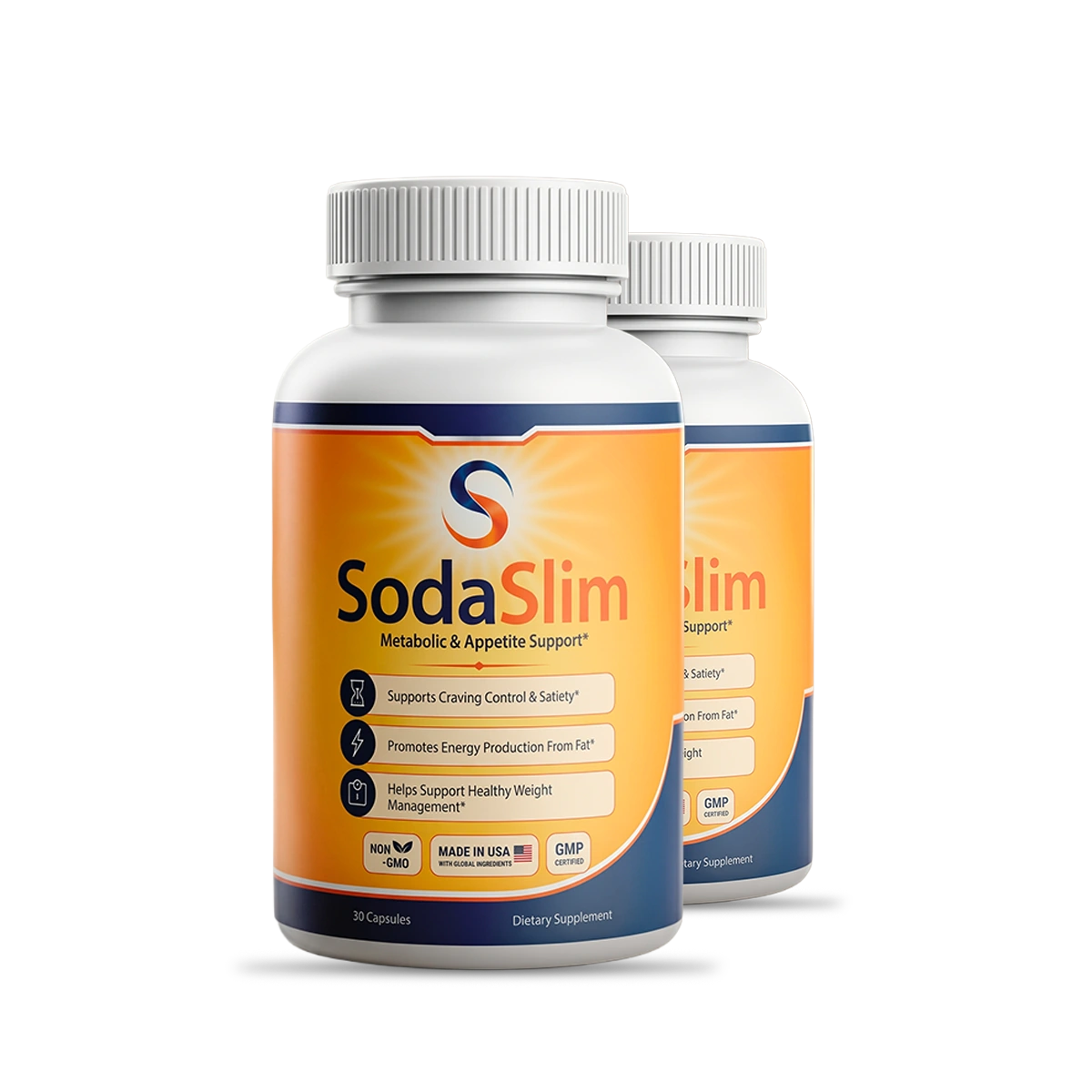
Thirty capsules to the bottle, one of them each morning. Five botanicals are named on the front, and the window to change your mind runs sixty days from purchase.
Two bottles $158 · six bottles $294 · 60-day money-back guarantee
Order SodaSlim On The Official WebsiteOne capsule a day · 30 per bottle · lot SOD-26/SO-3114
The one-day test that answers it
Since the arithmetic is unavailable, substitute an experiment. It takes a single day and it produces a genuinely useful answer.
Pick a day with no work deadline in it. Have no coffee, no tea, no cola and no energy drink before or after the capsule. Take one capsule in the morning, with food, at the time you would normally take it. Then write down what happens over the following four hours.
The point is isolation. Whatever you feel on that day belongs to the capsule, because nothing else in the day could have caused it. Once you know roughly where it sits, every subsequent day can be built around that estimate.
| What you notice on the caffeine-free day | What it suggests | What to do next |
|---|---|---|
| Nothing at all | A modest amount, at the low end of the range | Your usual coffee routine probably continues unchanged |
| A clear lift, like one strong coffee | A moderate amount | Drop one coffee on capsule days and keep the rest |
| Jittery, fast heartbeat, restless | A substantial amount | Treat it as two coffees. Remove that much from the day |
| Could not sleep that night | Substantial, or taken too late | Move it earlier. If it was already morning, this product is strong for you |
| Stomach upset, no stimulation | Probably not the caffeine | Take it with a larger breakfast for a week and reassess |
What too much actually feels like
Caffeine excess is not subtle, which is the one helpful thing about it. Jitteriness in the hands, a heart that feels fast or heavy, restlessness that does not resolve into useful energy, an unsettled stomach, and a night where sleep arrives late or in pieces.
Sleep in particular is worth taking seriously on a weight product. a 2025 meta-analysis on caffeine and sleep pooled trials of caffeine taken before late afternoon or evening activity and found it shortens and fragments that night's sleep. Short sleep is associated with higher appetite the following day, so a capsule that costs an hour of sleep is working against the very thing it is sold for.
Blood pressure is the other measurable one. a meta-analysis of blood pressure trials pooled randomised trials of regular coffee and caffeine intake and found small real increases, larger when caffeine was given on its own than when it arrived as coffee.
The medicines that change the arithmetic
Caffeine is cleared largely by a liver enzyme called CYP1A2, and a number of widely used medicines either inhibit that enzyme or are themselves affected by it. a review of caffeine drug interactions catalogues the clinically significant interactions, and the list is longer than most people expect.
What an interaction does in practice is change how long the caffeine lasts rather than how strong it feels at first. A drug that halves your clearance turns a morning capsule into an all-day one, and the first symptom is usually a night's sleep rather than anything dramatic.
Because the capsule's amount is unstated, the size of any interaction is unstated too. That is the single strongest reason to name the product at the next appointment rather than reasoning about it at home.
What to do with an unlabelled stimulant
Four things, and none of them requires giving up on the product.
Run the one-day test before anything else, so you are working from an estimate rather than from nothing. Take it in the morning, every time, because that is the instruction and the reason for the instruction is sleep. Do not add it on top of an existing high coffee intake; swap rather than stack. And stop if the jitteriness is still there after a week, because a stimulant that does not settle is not one you should be taking blind.
The larger point is worth stating once. A label that printed its caffeine content would make all of this unnecessary, and several products in this aisle do print it. Where one does not, the reader has to do the work, and this is what the work looks like.
A racing or irregular heartbeat, chest discomfort, severe anxiety or repeated bad nights are not things to work around. Stop the capsule and, if anything about the heart is involved, get it looked at. A supplement is never worth pushing through those.
Further reading on this site: the side effects page sets the stimulant question out in full, and the ingredients page prints the researched dose for every one of the five botanicals in this capsule.
- Doepker C, Franke K, Myers E, Goldberger JJ, Lieberman HR, O'Brien C, et al. Key Findings and Implications of a Recent Systematic Review of the Potential Adverse Effects of Caffeine Consumption in Healthy Adults, Pregnant Women, Adolescents, and Children. Nutrients. 2018;10(10):1536. PMID 30340340. https://pubmed.ncbi.nlm.nih.gov/30340340/
- Kocak A, Georgousopoulou E, Knight-Agarwal CR, Matthews R, Minehan M. The Effect of Consuming Caffeine Before Late Afternoon/Evening Training or Competition on Sleep: A Systematic Review with Meta-Analysis. Sports (Basel). 2025;13(9):297. PMID 41003623. https://pubmed.ncbi.nlm.nih.gov/41003623/
- Noordzij M, Uiterwaal CS, Arends LR, Kok FJ, Grobbee DE, Geleijnse JM. Blood pressure response to chronic intake of coffee and caffeine: a meta-analysis of randomized controlled trials. J Hypertens. 2005;23(5):921-8. PMID 15834273. https://pubmed.ncbi.nlm.nih.gov/15834273/
- Carrillo JA, Benitez J. Clinically significant pharmacokinetic interactions between dietary caffeine and medications. Clin Pharmacokinet. 2000;39(2):127-53. PMID 10976659. https://pubmed.ncbi.nlm.nih.gov/10976659/
- Dulloo AG, Geissler CA, Horton T, Collins A, Miller DS. Normal caffeine consumption: influence on thermogenesis and daily energy expenditure in lean and postobese human volunteers. Am J Clin Nutr. 1989;49(1):44-50. PMID 2912010. https://pubmed.ncbi.nlm.nih.gov/2912010/