SodaSlim Official Website › Blog › Garcinia, Green Tea Extract And The Live
Garcinia, Green Tea Extract And The Liver: When To Stop
Two ingredients common in this category have case reports of liver injury attached to them.
Garcinia cambogia and concentrated green tea extract both appear in the herbal liver-injury literature, including cases requiring transplantation. It is rare against the number of bottles sold, it is documented, and the signs are worth knowing.
Why a shop writes this at all
Because it is true, it is findable, and a reader who discovered it somewhere else would be right to wonder why the site selling the product had not mentioned it.
There is a second reason. Liver injury of this kind is rare and it is recognisable, which means the difference between a bad outcome and an inconvenient one is often whether somebody recognised the signs and stopped. That makes this genuinely useful information rather than a disclaimer.
And a third. Every page on this site argues that a label should print its amounts. This is where that argument stops being abstract: the reports cluster at the high-dose end of the green tea extract range, and a label without a number cannot tell a reader where in the range it sits.
What the garcinia reports describe
The garcinia literature is a series of case reports rather than a trial signal. a 2016 acute liver failure case report describes acute liver failure associated with garcinia use. a transplantation case report describes a case in which the failure required liver transplantation.
a 2025 review of garcinia hepatotoxicity reviewed the whole body of it in 2025 and is the best single starting point for anybody who wants the detail. a 2025 case report adds a 2025 case in which hepatotoxicity appeared alongside sideroblastic anaemia after a garcinia-based supplement.
Case reports have real limitations and they are worth naming. They cannot establish how often something happens, they frequently involve multi-ingredient products where attribution is uncertain, and they are published precisely because they are unusual. What they do establish is that the association exists and has been seen by clinicians more than once.
Green tea extract, and the USP review
The green tea extract picture is better characterised, largely because the US Pharmacopeia hepatotoxicity review exists. The United States Pharmacopeia convened a review of the hepatotoxicity reports and reached a conclusion worth quoting in substance: concentrated green tea extract taken as a supplement carries a small risk of liver injury that drinking brewed tea does not.
Two details from that work are the practically useful ones. The risk appears associated with higher doses of catechins rather than with the ingredient as such, and taking the extract on an empty stomach appears to increase exposure and with it the risk. Both point at the same advice: take it with food, and know the dose.
a 2025 review of herbal liver injury covers the wider difficulty of identifying herbal liver injury at all, which is considerable. a 2024 US exposure estimate estimated how many adults in the United States are exposed to six potentially hepatotoxic botanicals, and the figure is large enough to make the rarity of the reports meaningful.
How rare, in the only numbers available
Nobody can give a precise rate, and it is worth understanding why rather than treating the absence as evasion. Supplement adverse events are not systematically reported, the denominator is unknown because nobody counts bottles taken, and many products contain several ingredients so attribution is hard.
The best available context comes from the emergency department analysis, which estimated emergency department visits in the United States attributable to dietary supplement adverse events. Weight-loss products were among the leading categories, and cardiac symptoms rather than liver symptoms were the commonest presentation among young adults.
The reasonable summary: liver injury from these ingredients is rare against very large exposure, and it is not so rare that a person taking a product containing both should be unaware of the signs.
| Ingredient | What the literature contains | Where the risk appears to sit |
|---|---|---|
| Garcinia cambogia | Case reports, including transplantation | Not clearly dose-related in the published cases |
| Green tea extract | A formal USP review of the reports | Higher catechin doses, and on an empty stomach |
| Brewed green tea | No comparable signal | The concentration is the difference |
| Caffeine | No liver signal at ordinary intakes | Its risks are cardiovascular and sleep-related |
| Green coffee bean | No comparable signal | |
| Raspberry ketone | No comparable signal | It also has no efficacy evidence in humans |
SodaSlim, while you are reading about it
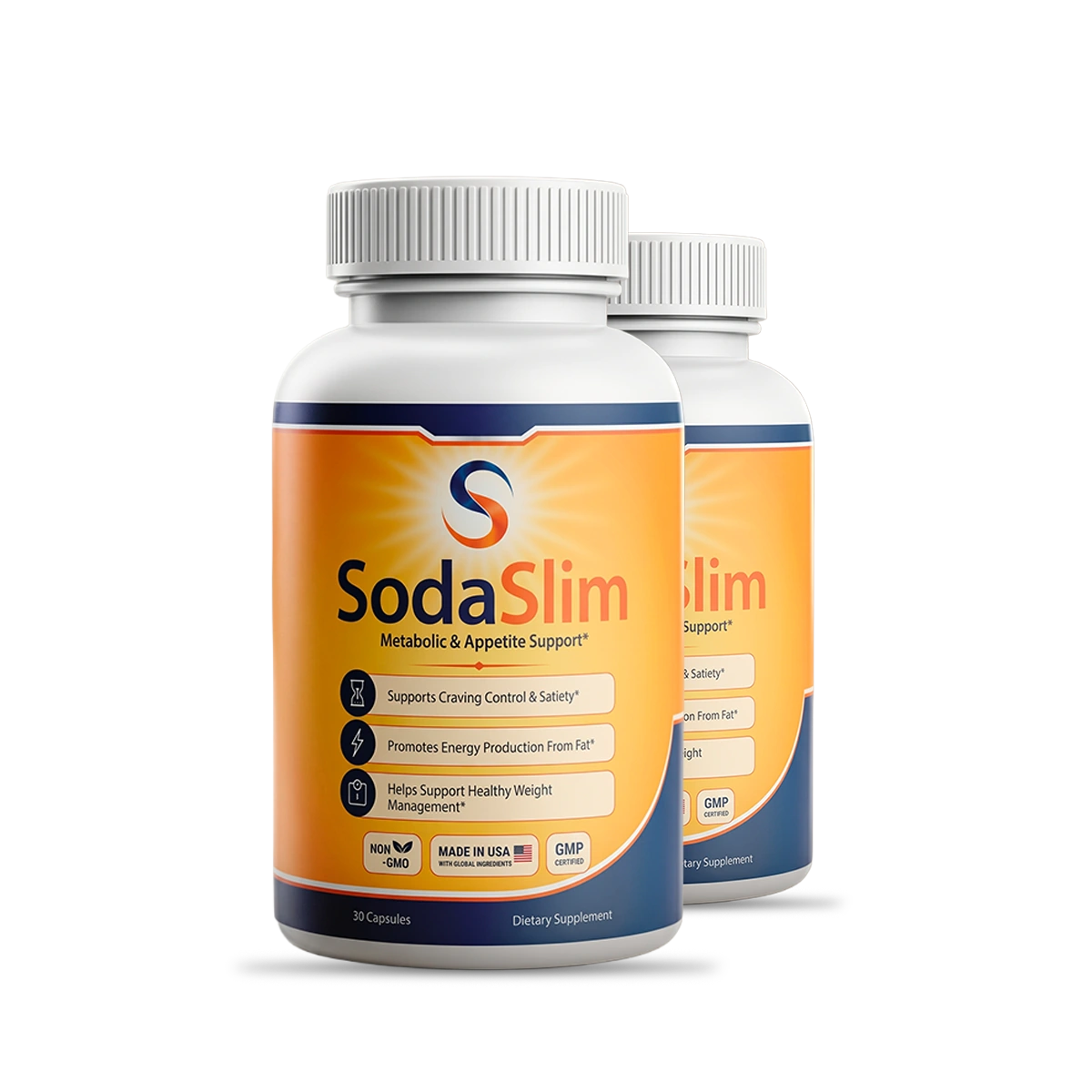
Thirty capsules to the bottle, one of them each morning. Five botanicals are named on the front, and the window to change your mind runs sixty days from purchase.
Two bottles $158 · six bottles $294 · 60-day money-back guarantee
Order SodaSlim On The Official WebsiteOne capsule a day · 30 per bottle · lot SOD-26/SO-3114
The six signs that mean stop
These are the presenting features in the published cases. Any of them, in somebody taking a botanical supplement, is a reason to stop the supplement and arrange to be seen rather than to wait and watch.
- Yellowing of the skin, or of the whites of the eyes. The most recognisable sign and often not the first.
- Dark urine, the colour of strong tea, without an obvious cause such as dehydration.
- Pale or clay-coloured stools.
- Persistent nausea or loss of appetite that has gone on for days rather than hours.
- Pain or discomfort under the right ribs, where the liver sits.
- Unusual tiredness, particularly arriving alongside any of the above.
Take the bottle with you. A clinician assessing possible drug-induced liver injury needs to know everything you have been taking, and the ingredient list on the label is more useful than a half-remembered product name.
Everything else here is information to weigh. This list is not. If these signs appear while you are taking a botanical supplement, stop taking it and get seen. That advice costs nothing if it turns out to be something else.
Who should be more careful than average
- Anyone with existing liver disease of any kind, or a history of liver injury from a medicine or a supplement.
- Anyone taking a medicine known to affect the liver, which is a longer list than most people expect and worth asking about rather than guessing.
- Anyone drinking heavily, because alcohol and a hepatotoxic exposure are not independent risks.
- Anyone taking several botanical supplements at once, where the exposure adds up and attribution becomes impossible if something goes wrong.
- Anyone taking a concentrated extract on an empty stomach, which the USP review specifically flags for green tea.
What this does not mean
It does not mean these ingredients are dangerous in the ordinary sense. Millions of bottles containing them are taken every year and the reports number in the dozens to hundreds, which is a rate that would be unremarkable for many things people take without a second thought.
It does not mean a botanical product is worse than a synthetic one. Several of the best-documented supplement liver injuries involve concentrated plant extracts precisely because concentration is what makes a plant into a dose.
And it does not mean the ingredients do nothing. Green tea catechins with caffeine have the strongest thermogenic evidence in this whole category. Garcinia, separately, failed its largest efficacy trial, which is a reason to discount its benefit rather than a reason to fear it.
Why attribution is so difficult
Reading this literature carefully means noticing how hard it is to say that a particular ingredient caused a particular injury, and the difficulty is worth understanding rather than glossing over.
Most of the products in the case reports contain several ingredients. Many people taking them are also taking prescription medicines, over-the-counter painkillers and alcohol, all of which have liver effects of their own. Supplements are frequently not mentioned to clinicians at all, so the exposure is often discovered late and reconstructed from memory.
On top of that, botanical products are not standardised the way medicines are. Two capsules carrying the same ingredient name can contain different extract strengths, different plant parts and different contaminant profiles, and in some documented cases the injury has been traced to an adulterant rather than to the named ingredient.
None of that makes the reports unreliable. It makes them conservative: the cases that reach publication are the ones where a clinician was confident enough to write them up, which is a higher bar than the true incidence would require.
What to actually do
Take it with food, which addresses the one clearly modifiable risk factor the USP review identified. Do not stack several botanical supplements containing the same extracts, because the exposure adds and nobody can untangle it afterwards. Know the six signs. And if you have any liver history at all, raise it before starting rather than after.
Then keep it in proportion. This is a rare outcome with recognisable warning signs, and knowing them turns it from something to worry about into something to act on.
Further reading on this site: the side effects page covers the stimulant side alongside this one, and the ingredients page sets out every trial dose behind the five botanicals in this capsule.
- Corey R, Werner KT, Singer A, Moss A, Smith M, Noelting J, et al. Acute liver failure associated with Garcinia cambogia use. Ann Hepatol. 2016;15(1):123-6. PMID 26626648. https://pubmed.ncbi.nlm.nih.gov/26626648/
- Lunsford KE, Bodzin AS, Reino DC, Wang HL, Busuttil RW. Dangerous dietary supplements: Garcinia cambogia-associated hepatic failure requiring transplantation. World J Gastroenterol. 2016;22(45):10071-10076. PMID 28018115. https://pubmed.ncbi.nlm.nih.gov/28018115/
- van Breemen RB, Roe AL, Akhtar N. Hepatotoxicity of dietary supplements containing Garcinia gummi-gutta (L.) N. Robson. Pharm Biol. 2025;63(1):912-924. PMID 41262061. https://pubmed.ncbi.nlm.nih.gov/41262061/
- Tang K, Cheung CY. Rare association between hepatotoxicity and sideroblastic anaemia after taking Garcinia cambogia-based dietary supplement. BMJ Case Rep. 2025;18(6):e265012. PMID 40555541. https://pubmed.ncbi.nlm.nih.gov/40555541/
- Oketch-Rabah HA, Roe AL, Rider CV, Bonkovsky HL, Giancaspro GI, Navarro V, et al. United States Pharmacopeia (USP) comprehensive review of the hepatotoxicity of green tea extracts. Toxicol Rep. 2020;7:386-402. PMID 32140423. https://pubmed.ncbi.nlm.nih.gov/32140423/
- Halegoua-DeMarzio D, Navarro V. Challenges in herbal-induced liver injury identification and prevention. Liver Int. 2025;45(3):e16071. PMID 39136211. https://pubmed.ncbi.nlm.nih.gov/39136211/
- Likhitsup A, Chen VL, Fontana RJ. Estimated Exposure to 6 Potentially Hepatotoxic Botanicals in US Adults. JAMA Netw Open. 2024;7(8):e2425822. PMID 39102266. https://pubmed.ncbi.nlm.nih.gov/39102266/
- Geller AI, Shehab N, Weidle NJ, Lovegrove MC, Wolpert BJ, Timbo BB, et al. Emergency Department Visits for Adverse Events Related to Dietary Supplements. N Engl J Med. 2015;373(16):1531-40. PMID 26465986. https://pubmed.ncbi.nlm.nih.gov/26465986/